The Backbone Decision: Spatchcock, Butterfly or Leave It Whole?

Photo: spatchcocked chicken flat on baking tray with lemon and herbs before roasting, via img.jagranjosh.com
Behind the counter we get asked this most weeks, usually on a Friday, usually by someone holding a chicken in one hand and a phone in the other. Whole, spatchcocked or butterflied? The honest answer is that there's no best method — only wrong methods for particular evenings.
First, the bit about the words
Spatchcock and butterfly get used as though they're the same thing, and in most shops they effectively are. For the sake of argument, let's say spatchcocking means the backbone comes out entirely and the bird is pressed flat; butterflying means it's split along one side of the backbone and opened out like a book. Same destination, slightly different knife work, and the second is more forgiving if you're not confident with poultry shears.
If you ask a butcher for either, you'll get something flat and cookable. Don't lose sleep over the terminology; lose sleep over the timing instead.
Whole: the Sunday default
The whole bird gives you the best skin, because the skin sits up and away from the tin. It gives you a cavity for stuffing or a lemon and a handful of thyme. It gives you juices in the tin for gravy and a frame for stock afterwards. And it gives you the thing people actually remember, which is a bird arriving at the table in one piece.
Roughly: a 1.8kg bird at 190°C fan for about 1 hour 15, then a good 20–25 minutes resting. Larger joints need longer and slower; a 4kg Christmas bird wants closer to two hours at 180°C fan.
It suits a Sunday, a table of people who want both breast and leg, and a cook with time to rest it. It doesn't suit a Tuesday, a small oven, a barbecue, or a bird that barely fits the tin.
Spatchcock: backbone out, bird flat
Shears or a heavy knife down each side of the backbone, backbone out (keep it — it goes in the stock pot), then press firmly on the breastbone until it cracks and the bird lies flat. Tuck the wing tips behind.
What you gain is speed and evenness. A flat bird is a thin bird, and a thin bird cooks quickly at a high heat. 1.6–1.8kg at 200–210°C fan, 35–45 minutes, checked at 35. Skin all facing up, exposed to the heat, crisping properly.
What you lose is a little finesse. The breast sits closer to the heat and can dry before the legs are done. The underside doesn't crisp. And the drama of a whole bird at the table becomes a board of joints instead. Fix the dryness by starting it on a preheated tray or a bed of onions, and finishing it hot for the last ten minutes.
Butterfly: split and opened
Same idea, one cut. Split along one side of the backbone and open the bird out, flattening the breastbone as you go. You end up with a wider, slightly more natural shape than a fully pressed spatchcock, and a built-in line down the middle to carve along.
Timings run close to spatchcock — perhaps five minutes longer for a big bird. It's the version I'd choose for a barbecue, because it sits flat across two heat zones: legs over the coals, breast over the cooler side, lid down. In a domestic oven it's the easiest way to get a whole bird properly browned on one shelf without the top scorching.
At a glance
| Method | Heat | Rough time (1.8kg) | Skin | Carving |
|---|---|---|---|---|
| Whole | 190°C fan | 1h 15 + 25 min rest | Best | More work at the table |
| Spatchcock | 200–210°C fan | 35–45 min | Very good on top | Easy, down the middle |
| Butterfly | 200°C fan | 40–50 min | Very good, even | Easiest of the three |
Choosing by the clock, not the cookbook
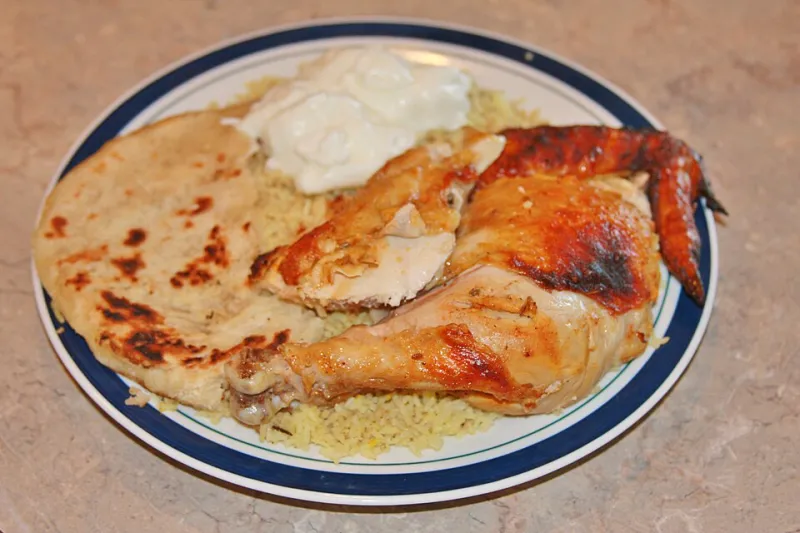
A weeknight with a 1.4kg bird and forty minutes to spare: spatchcock it, salt the skin, hot oven, flatbread and something green.
A Sunday with people coming: whole, trussed loosely, resting on the sideboard while the potatoes finish.
A barbecue in June: butterfly it, two zones, lid on, lid off at the end.
Cooking for two: butterfly a small bird, eat half hot and keep half for Monday's sandwiches and a pan of stock.
And if you've bought a bird that's already lopsided or awkwardly shaped, flattening it is the single most useful thing you can do. A flat bird has no thick side and thin side to argue about.
Carving, and the bones afterwards
Whole: legs off first, then take the breast off the bone in one piece and slice across the grain. Flat: cut down the centre line, then across; or simply take the legs off and carve the breast meat on the board. Either way, keep everything — a flattened carcass fits into a smaller pot and gives up its flavour faster than a whole one, which is a small mercy on a school night.
Whatever you choose, salt the bird the night before if you can, get the skin properly dry, and give it room in the tin. Those three things matter more than any argument about backbones.