Ordering the Christmas Bird with Confidence: A 2026 Turkey Checklist for British Kitchens
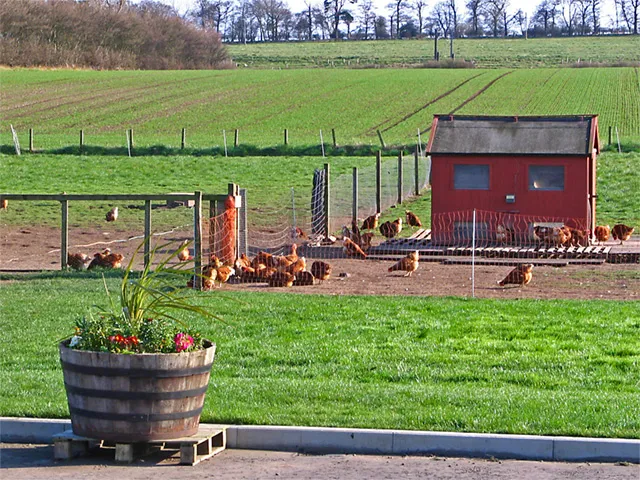
Photo: Alastair Seagroatt, CC BY-SA 2.0, via Wikimedia Commons
Christmas planning has a way of arriving before the frost does. By the time the lights are up, the good birds from small farms are often spoken for. That is not meant to hurry you into a panic-buying spiral. It is simply a nudge to ask a few sensible questions now, while there is still choice on the board.
The supermarket aisle can tell you plenty about price and very little about the life the bird had. A farm shop or butcher can tell you more, if you know what to ask. Here are twelve questions we would put to any producer before ordering a British turkey for Christmas 2026.
The farm and the breed
1. Which farm reared the bird, and can I see how?
A good producer should be able to name the farm, not just the county. Ask whether you can visit, or at least see photos and understand the system. If the answer is vague, treat that as useful information rather than a reason to argue. Local sourcing is not about guilt; it is about knowing what you are buying.
2. What breed is it, and why?
Bronze, white, Norfolk Black and slower-growing crosses all cook and taste a little differently. Traditional breeds often have more fat and a stronger flavour, while modern white birds can be more predictable. Neither is automatically better. The question is whether the breed suits the farm and the kitchen it is going to.
3. How was it reared?
Ask about space, shelter, outdoor access and the age at which the birds went outside. Free-range and organic systems have clear standards, but the day-to-day reality still matters. A farmer who is happy to talk you through the shed, the field and the feed is usually a farmer worth listening to.
4. What does the label actually mean?
Red Tractor, Free Range, Organic and RSPCA Assured all tell you something, but they are not interchangeable. Ask what the label covers on this particular farm. A label is a starting point, not a substitute for a conversation. If a producer cannot explain the difference between their standard and the supermarket one, keep asking.
Age, hanging and the calendar
5. How old was the bird at slaughter?
Christmas turkeys are not all raised to the same age. A slower-grown bird usually has more time to develop flavour and texture, but it also costs more to produce. Ask the age and ask why the farm chooses it. You are not being nosy; you are working out what kind of bird will arrive in your oven.
6. Has it been hung, and for how long?
Some producers hang turkeys for a few days to relax the muscle and deepen the flavour. Others chill them quickly and send them straight out. Both can be good, but they behave differently in the kitchen. Hanging is not a magic trick, and longer is not always better. The useful answer is a specific one.
7. Is it fresh or frozen, and when was it chilled?
Fresh is not a moral category. A well-handled frozen bird can be excellent, and a fresh bird that has sat too long is nobody’s friend. Ask for the date it was prepared and the date it should be collected or delivered. If you are freezing it yourself, make sure you have the space before the big shop lands.
Weight, collection and delivery
8. What weight do I actually need?
As a generous rule of thumb, allow about 500g of raw bird per person if you want proper leftovers, or 350–400g if you are cooking a crown. Think about Boxing Day sandwiches, stock and a second supper. Ask the producer how they calculate it; they will have heard every family size going.
9. Collection or delivery, and what is the cut-off?
December delivery slots fill quickly, especially in the final week. Ask where and when you collect, what happens if the roads turn, and whether someone needs to be in. If delivery is included, check the packaging and the expected arrival window. A bird that arrives on the 23rd is useful; one that arrives on the 27th is a very expensive lesson.
10. What is the deposit and cancellation policy?
Small farms carry real costs over Christmas. A deposit is normal, but the terms should be clear. Ask what happens if your plans change, if the bird is smaller or larger than expected, or if there is a problem on the day. Good producers are straightforward about this because they would rather sort it out early than argue later.
Packing, cooking and the day itself
11. How will it be packed and transported?
Ask whether it will be boxed, bagged or vacuum-packed, and whether it needs to stay cold on the journey home. If you are travelling to family, say so. A turkey that has spent four hours in a warm car is not the same turkey that left the farm. Practical details matter more than pretty packaging.
12. What cooking support do you offer?
A good butcher will tell you the weight, the recommended cooking time and whether the bird is best roasted slowly or hot. Ask about resting, stuffing and whether the giblets are included. Ask, too, what to do with the carcass. The best Christmas purchases come with a bit of aftercare, not just a price tag.
The honest bottom line
You do not need to interrogate every farmer like a detective. Pick the questions that matter to your household, ask them politely, and listen to the answers. The right bird for Christmas 2026 is not necessarily the biggest or the most expensive. It is the one whose story makes sense, whose weight suits your table, and whose producer is still happy to talk to you in December.