The Calm Crowd Roast: Why Two Smaller Birds Beat One Giant One
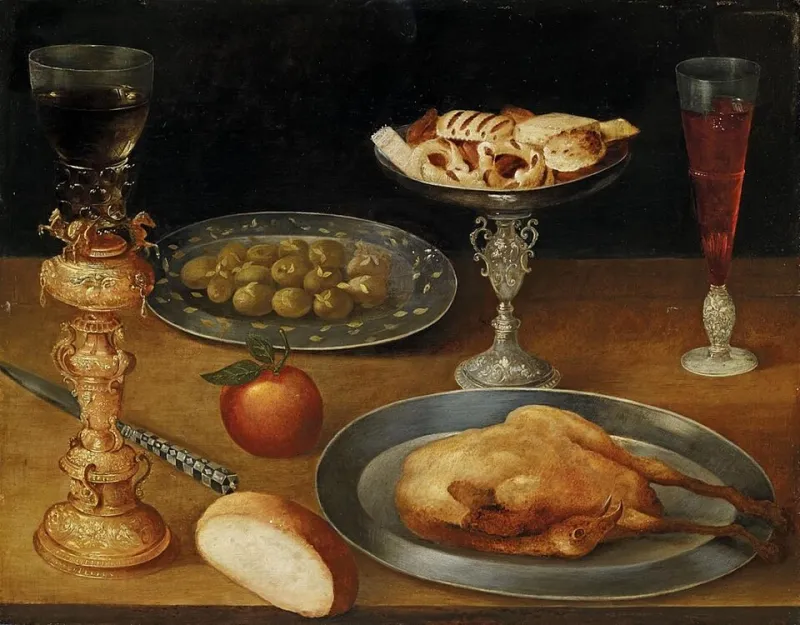
Photo: After Osias Beert / Gotthardt Wedig, Public domain, via Wikimedia Commons
There is a particular kind of quiet panic that arrives when you invite a crowd for a winter roast. You picture the table: candles, claret, a great golden bird. Then you remember your oven is only so wide, your roasting tin only so deep, and your patience only so long. The good news is that the answer isn’t a bigger bird. Very often, it’s two smaller ones.
Cooking two modest British chickens — or two smaller turkeys — is not a compromise. It’s a practical, generous way to feed a crowd while keeping the cooking calm and the meat juicy. Think of it as splitting the job, not doubling the stress.
Why two smaller birds often make more sense
A huge bird looks impressive, but it can be a awkward thing to cook evenly. The breast can dry out before the legs are done, the skin can steam under foil while you wait, and lifting it in and out of the oven becomes a two-person operation. Smaller birds are simply easier to handle and more forgiving.
There’s also more skin-to-meat ratio, which matters in a winter roast. More crisp skin, more dark meat, more places for the heat to do its work. And if one bird is slightly ahead of the other, you have a natural buffer. You can carve one while the second rests, rather than trying to carve a single enormous bird while everything else goes cold.
For a gathering of eight to ten, two good-sized chickens are often a smarter bet than one very large bird. For a bigger crowd, two smaller turkeys can be easier to manage than one vast one. The principle is the same: choose birds that fit your oven, your tins and your energy.
Choose a sensible pair
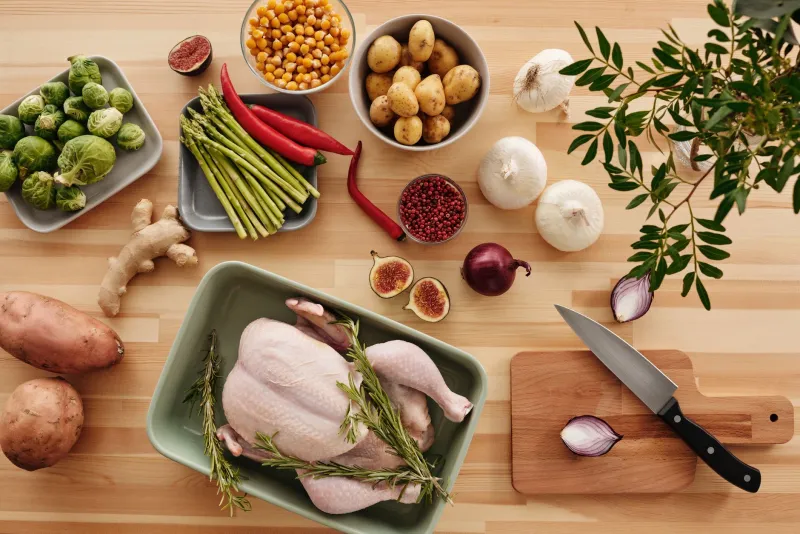
Ask your butcher or farm shop for two birds of similar size and type. Matching them makes timing far easier. If you’re buying British free-range chickens, look for good cover and firm skin. If you’re ordering turkeys, don’t leave it late — even in 2026, the best small birds go early in December.
You can pair a chicken and a turkey if you like, but keep their cooking times reasonably close. A small chicken and a small turkey can work beautifully, but a small chicken and a huge turkey will have you juggling oven shelves like a circus act. Simplicity wins.
The oven maths
Two birds need space. Crowding them into one tin is the fastest route to pale, steamed skin. Use two roasting tins, or one large tin with a rack so the heat can move around. If your oven has a fan setting, reduce the temperature slightly and rotate the tins halfway through. If you’re using a meat thermometer, check the thickest part of the thigh and the breast — it takes the guesswork out of the final stretch.
Don’t try to roast two birds at the same time unless they genuinely fit side by side with room to breathe. If they don’t, stagger them. This is the host’s secret: one bird goes in, then the second follows about thirty to forty minutes later. The first rests while the second finishes. By the time you carve, you’re not frantic — you’re simply working through a plan.
A workable winter timetable
Let’s say you’re serving at 5pm and cooking two 2kg chickens. Heat the oven to 200°C fan or equivalent. Put the first bird in at 2.15pm. Put the second in at 3pm. The first comes out around 3.30pm, the second around 4.15pm. Rest both loosely under foil and a tea towel — not tightly wrapped — and carve at 5pm.
That first bird will rest longer, which is fine. If the skin softens, return it uncovered to a hot oven for eight to ten minutes before carving. The second bird will be ready to carve while the first is already jointed and waiting. For turkeys, stretch the timings according to weight, but keep the same principle: stagger, rest, and don’t panic.
Keep the skin crisp
Crisp skin starts before the oven. Dry the birds thoroughly, salt them well and leave them uncovered in the fridge if you have time. A little air is your friend. At the end, avoid covering them tightly with foil. A loose tent lets steam escape while keeping the meat warm. If you need to re-crisp, a blast of high heat does more good than another ten minutes under wrap.
When carving, work with one bird at a time. Keep the second resting in a warm spot. Carve the breast in thick slices, then joint the legs. Pile it onto warm plates and let people help themselves. A crowd roast should feel generous, not surgical.
Gravy, sides and the final calm
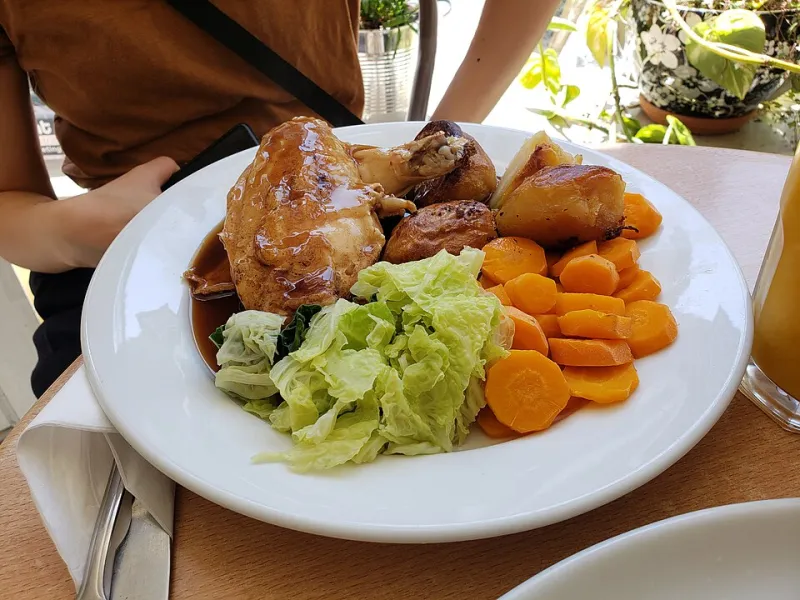
Use the roasting tins for gravy — there’s flavour in every sticky patch. If you have giblets, simmer them for stock while the birds roast. Get the potatoes and roots into the oven after the second bird comes out, or cook them alongside if there’s room. Warm the plates. Open the wine. The final ten minutes should be about gathering people, not wrestling with a roasting tin.
Two smaller birds give you something a single giant bird rarely does: margin. Margin for resting, margin for carving, margin for the odd oven wobble. It’s a quietly confident way to host a winter crowd — and it keeps the best of the bird, the crisp skin and the calm kitchen, firmly on your side.