One Bird, Four Dinners: The Sunday Knife Work That Pays You Back
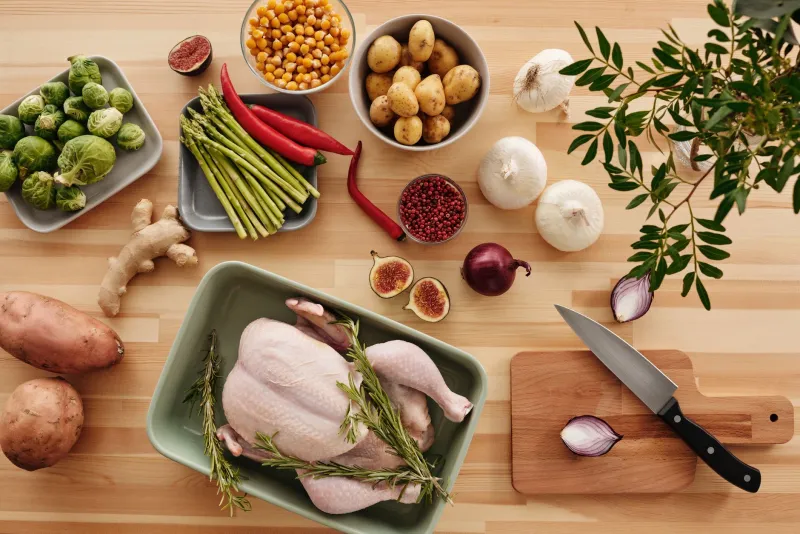
There is a quiet bit of maths behind the whole-bird habit. A pack of two British chicken breasts might set you back £5 to £7, depending on where you shop. A decent whole bird, often between 1.6kg and 2kg, can cost roughly the same or a little more — but it gives you two breasts, two legs, two thighs, wings, and a carcass that makes stock. That is not a coupon-clipping trick. It is just buying the bird in the shape it was grown.
The catch, of course, is the knife work. For a lot of home cooks, a whole chicken is either a Sunday roast or a puzzle. It needn’t be either. You do not need a butcher’s block, a cleaver, or a YouTube degree in anatomy. You need a sharp small knife, a bit of counter space, and twenty minutes on a Sunday. After that, the week gets much easier.
Start with the bird, not the recipe
Buy the best bird you can reasonably afford — a free-range or organic British chicken, or a cockerel if your butcher has one. A good bird has firm skin, a clean smell, and a bit of fat under the skin that will keep the meat juicy. If it comes trussed, snip the string and take it off. Sit the bird breast-side up on a sturdy board. Pat it dry with kitchen paper. Raw chicken is slippery enough without added moisture.
Have a bowl ready for bones and another for the pieces you are keeping. Clear the sink area. This is not a race, and it is much nicer with everything within reach.
The kit that actually earns its place
A small, sharp knife is the main event — a boning knife if you have one, but a paring or utility knife will do. A large board with a lip or a damp tea towel underneath stops it sliding about. Kitchen scissors are handy for wing tips and trimming skin. You will want freezer bags or small tubs, a marker pen, and labels. A cleaver is optional; most home joints can be found and cut with a small knife. Save the heavy equipment for another day.
Find the joints with your fingers, not force
This is the bit that changes everything. Chicken joints are not hidden; they are just not obvious until you feel for them. Do not saw through bone if you can help it. Let the bird show you where it comes apart.
For the legs, sit the bird breast-side up. Take a leg in your hand and pull it gently away from the body. You will feel a crease of skin between the leg and the breast. Cut through that skin, then bend the leg outwards until the hip joint pops slightly. Slide your knife into the gap and cut through the remaining connective tissue. The leg should come away cleanly. Repeat on the other side. To separate the thigh from the drumstick, bend the leg at the knee, find the soft spot between the two, and cut through.
For the wings, either leave them whole or cut through the shoulder joint where the wing meets the body. If you are making stock, the wing tips can go straight into the pot.
For the breasts, turn the bird breast-side up again. Cut down one side of the breastbone, following the curve of the ribs with the knife close to the bone. Ease the breast away with your fingers as you go. If you prefer, leave the breasts on the bone — they roast beautifully and stay juicy. The remaining carcass goes into a bowl for stock.
Four suppers from one session
Once the bird is in pieces, the week opens up. Roast the legs and thighs on Sunday with potatoes, carrots, and a little cider or stock in the tin. That is supper one, with gravy made from a splash of the stock if you have already simmered the carcass.
On Monday, slice a breast for a quick stir-fry with greens and noodles, or simmer it gently in a curry. On Tuesday, use the second breast in a traybake with leeks and mustard cream, or in a chicken and mushroom pie. On Wednesday, make a stock from the carcass and use it for a risotto, soup, or a pot of lentils with shredded leftover chicken. That is four dinners from one bird, plus a lunch if you are lucky.
Wrap it like you mean it
Raw chicken keeps best when it is not sitting in a puddle of its own juices. Pat the pieces dry, wrap them individually or in meal-sized portions, and press out as much air as you can. Label each bag with the contents and the date. Flat-freeze breasts and thighs so they stack neatly. Use within three months for best quality, and always thaw in the fridge on a plate, never on the worktop.
Do not wash raw chicken — it spreads bacteria around the sink. Just cook it properly. If you are making stock, simmer the carcass within a day or freeze it until you have time. A carcass takes up little space and gives back far more than it costs.
If you’d rather the butcher did the first cut
There is no medal for doing everything yourself. If you like the idea of a broken-down bird but not the knife work, ask your butcher. A straightforward request works best: ‘Could you joint this into two breasts, two legs and thighs, and keep the carcass and wings for stock?’ Ask them to leave the skin on the breasts if you plan to roast them. At a good butcher counter or farmers’ market, this is a normal request, not a fuss. You still get the thrift of a whole bird, with a head start on the week.
A note on confidence
The first bird you break down will look a bit ragged. The second will be neater. By the third, you will wonder why you ever paid extra for a plastic tray of breasts. That is the real prize: not just cheaper portions, but a kitchen that feels a little more capable on a Sunday and a lot calmer by Wednesday.