The Crisp Skin Rule: Why the Best Sunday Bird Gets Left Alone
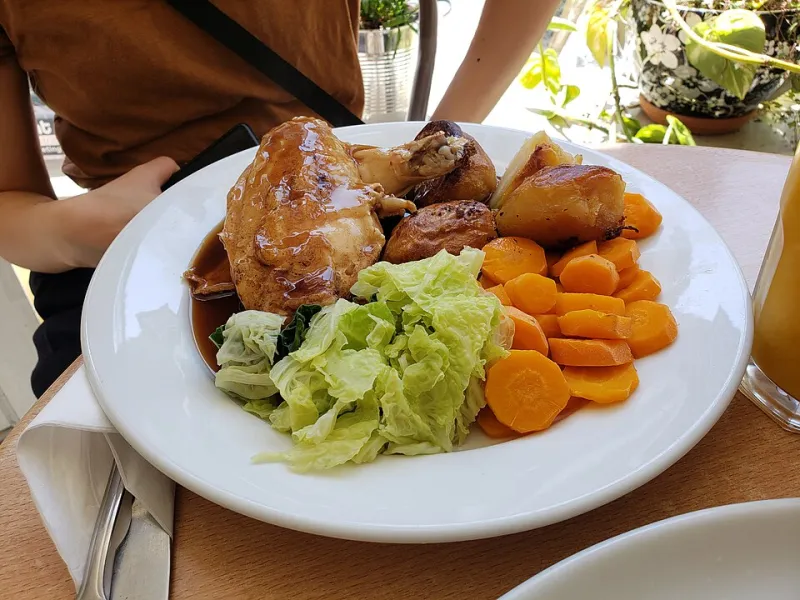
Photo: Andy Li, CC0, via Wikimedia Commons
There is something deeply reassuring about opening the oven every twenty minutes and spooning hot fat over a roasting bird. It looks like cooking. It smells like Sunday. It feels like the right thing to do. But if you have ever wondered why your chicken comes out with skin that is more elastic than crisp, or why your turkey seems to steam rather than roast, the baste may be the culprit.
This is not a scolding. Basting is one of those kitchen habits passed down with good intentions, like keeping the best china for guests or adding a splash of water to scrambled eggs. But when it comes to crisp skin, the spoon is not your friend. The oven, the salt and a bit of patience are.
The Baste Myth
Here is the plain truth: basting does not lock in moisture. That old idea has been tested enough times to be politely retired. A roast bird is not a sponge with a sealed crust. Its juices are held by the meat itself, and by how gently you cook it and how long you rest it afterwards.
What basting does do is introduce moisture to the surface of the skin. Every time you open the oven, you lose heat. Every time you spoon pan juices over the bird, you give the skin a thin, wet coat to evaporate before it can brown. Do that often enough and you are essentially repeating the first ten minutes of roasting over and over. The skin never gets a proper run at crispness.
There is a place for a glaze near the end of cooking, especially if it is sticky and savoury. But constant basting is not a technique so much as a nervous habit. It makes the cook feel busy and the bird feel damp.
What Crisp Skin Actually Needs
Crisp skin is simple in theory. It needs a dry surface, enough heat, good air circulation and a bird with a decent layer of fat under the skin. It also needs you to leave it alone.
At Pear Tree Poultry, we like a bird that has been reared slowly and plucked cleanly, with skin that is intact and not bruised. That is the raw material. From there, the cook's job is mostly about managing moisture and temperature. Dry the skin. Salt it early. Keep the oven hot enough. Give the bird space in the tin. Then resist the urge to interfere.
A wet bird will not crisp. A crowded tin will steam. A low oven will render fat slowly but leave the skin pale. None of this is complicated, but it does require a small shift in mindset: the roast is not a pot to be stirred. It is a piece of farm produce doing its thing in dry heat.
A Dry Brine You Can Do on Friday
If you want juicy meat and well-seasoned skin, start with a dry brine. It is the most useful thing you can do for a Sunday bird, and it takes about two minutes.
Pat the bird dry with kitchen paper, inside and out. Sprinkle salt over the skin and into the cavity, using roughly a teaspoon of fine sea salt per kilogram of bird, or a little less if you are using a salty butter later. Put it on a plate or tray, uncovered, in the fridge. Leave it overnight, or for at least four hours if you are cooking on the same day.
The uncovered fridge time is doing two jobs. The salt seasons the meat, and the dry fridge air pulls moisture from the skin. By Sunday, the skin should feel tacky and dry rather than slippery. That is exactly what you want. If you are short on fridge space, put the bird on a rack over a tray and slide it onto the bottom shelf. Just keep it away from cooked foods and anything you would eat raw.
Butter Under the Skin, Not Over It
Butter is lovely, but smearing it over the outside of the bird is not always helpful. Butter contains milk solids, which can catch and burn before the skin has properly browned. A better move is to loosen the skin over the breast and push a soft herb butter underneath. Use your fingers gently, working from the neck end, and try not to tear the skin.
Under the skin, the butter bastes the breast from within as it melts. The outside stays dry, which is where the crispness comes from. If you want extra flavour, tuck a few sage leaves or a little lemon zest in with the butter. Keep the outside simple: a final rub of oil, a pinch of salt and perhaps some cracked pepper. Oil is more forgiving than butter on the surface because it does not burn as readily.
Heat, Space and a Hot Tin
Oven temperatures vary, and British fan ovens are famously brisk. As a rough guide, heat the oven to 220C conventional or 200C fan before the bird goes in. Roast it hot for the first twenty minutes to get the skin going, then turn down to 180C fan or 200C conventional for the rest of the cooking time. Gas cooks can use gas mark 7, then gas mark 6.
Use a roasting tin that is not much bigger than the bird, and put the bird on a rack if you have one. That keeps it out of the fat and lets the heat move underneath. Do not cram vegetables around it at the start; they release moisture and block the airflow. If you want roast potatoes, cook them in a separate tin or add them later.
And please, do not open the door every few minutes to check. Use the oven light. If you are looking, you are letting heat out. A bird that is left alone will colour more evenly and crisp more reliably than one that is fussed over.
Resting Is Part of the Roast
When the bird is cooked, take it out and leave it alone again. This is the hardest instruction for many cooks, but resting is what keeps the meat juicy. A chicken will happily rest for twenty to thirty minutes under a loose tent of foil. A turkey can rest for forty-five minutes to an hour, which gives you time to make gravy and get the vegetables out.
Do not wrap it tightly. You want the skin to stay crisp, not steam itself soft. A sheet of foil laid loosely over the top is enough. The internal temperature will continue to rise slightly as it rests, so pull the bird out when the thickest part of the thigh reads 75C on a meat thermometer. For turkey, check the thickest part of the thigh and the breast, avoiding the bone.
The Last Word
Basting is not wicked. It is just usually unnecessary. If you want to brush a glaze on in the final ten minutes, go ahead. If you want to spoon a little fat over a pale patch, fine. But the real work of a crisp-skinned, juicy Sunday bird happens before it goes in the oven and after it comes out. Dry the skin, salt it early, keep the oven hot, give the bird room and let it rest.
That is the farm-to-table way, really: buy well, prepare simply, and trust the ingredients. The best roast bird is not the one that has been basted into submission. It is the one you had the confidence to leave alone.