Know Your Oven: Heat That Tells the Truth About Your Bird
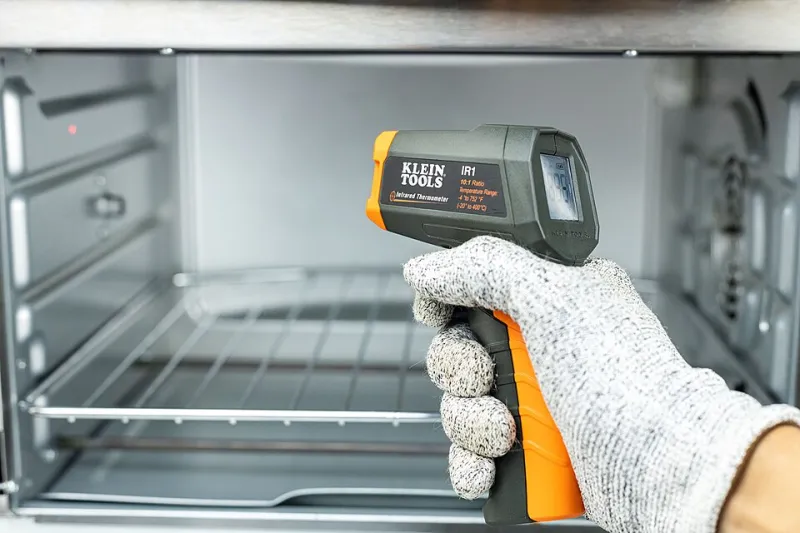
Photo: Luna Regina, CC BY-SA 4.0, via Wikimedia Commons
Two people buy the same two-kilo chicken from the same farm shop. They roast it at the same temperature for the same time, following the same recipe. One ends up with golden, juicy meat. The other gets a dry breast and a hip that is stubbornly pink. Nine times out of ten the difference is not the cook. It is the oven, and specifically the gap between the number on the dial and the heat actually sitting inside the cavity.
The dial is a suggestion, not a promise
Domestic ovens are blunt instruments. Elements switch on and off in cycles, thermostats drift, and manufacturers calibrate to their own idea of what 180°C means. A ten-degree error is normal. Twenty is common. There are ovens in British kitchens running forty degrees hotter than they claim, and their owners have spent years convinced that chicken just takes less time than the books say.
None of this is a disaster. It simply means you need to know what your oven is really doing before you trust it with a Christmas turkey.
Fan or conventional: the twenty-degree rule
A fan oven moves hot air around the cavity. Heat transfers faster, the surface of the bird dries more quickly, and things brown sooner. As a rule, set a fan oven about 20°C lower than a conventional one for the same result; some manufacturers suggest 25°C. Fan-assisted ovens sit somewhere in between, which is why the middle of the manual is often the most useful page in it.
| Conventional | Fan | Gas mark |
|---|---|---|
| 160°C | 140°C | 3 |
| 180°C | 160°C | 4 |
| 200°C | 180°C | 6 |
| 220°C | 200°C | 7 |
One more fan-oven caveat: the element and the fan itself usually sit at the back. A bird pushed hard against the rear wall will brown fiercely on one side while the front stays pale. Keep it central, and on the middle shelf unless your oven's manual says otherwise.
Finding the hot spots
The slice-of-bread test costs you four slices and twelve minutes. Line a baking tray with parchment, lay the bread out in a grid, and bake at 180°C fan for ten to twelve minutes. The pieces that darken first mark your hot corners. A tray dusted with plain flour does the same job. Most ovens run hottest at the back right and near the top; knowing that is the difference between an even bird and one you have to rotate halfway through.
The cheapest useful thing in your kitchen
A basic oven thermometer, the sort that hangs from a shelf, costs less than a decent chicken. Hang it in the centre, set the oven to 200°C, and leave it for twenty minutes before reading. Then repeat at 160°C on another day. Note the difference in both directions, because ovens do not always err consistently.
If your thermometer reads 185°C when you asked for 200°C, set the dial to 215°C. If it reads 220°C, knock twenty off. Write the correction on a note and stick it to the inside of a cupboard door, because you will forget.
Do check the thermometer itself now and then. A quick dip in boiling water should read close to 100°C; anything wildly out is a thermometer problem, not an oven problem.
Timings on the packet are a starting point
Supermarket and butcher timings assume a calibrated oven, a bird at room temperature and a tin of a sensible size. You may have none of those. Use the published time as your plan, then let a probe thermometer make the actual decision. For poultry, that means 74°C in the thickest part of the thigh, avoiding the bone, and a second check in the thickest part of the breast.
A probe also fixes the two most common failures: an oven that runs hot and dries the breast before the leg is done, and an oven that runs cold and leaves you guessing. Check early, then check again. Every time you open the door you lose heat — but a thirty-second check is cheaper than an overcooked bird.
Tin size, crowding and the steam factor
A bird crammed into a small tin sits in its own fat and steams underneath. Give it two or three centimetres of clearance on all sides and lift it onto a rack so the heat can reach the base. Root vegetables roasted around the bird will also release moisture and drop the effective temperature, so if you want crisp skin, roast the veg in a separate tin. It is one more washing-up, and it is worth it.
If your oven is genuinely unusual
Range cookers, Agas and older gas ovens all have personalities worth learning. An Aga's roasting oven behaves like a hot fan oven, so a bird goes in there to brown and finish, with a spell in the simmering oven for a large turkey. Old gas ovens cycle widely around the set temperature, which is fine for a long roast and awkward for anything precise. Combi ovens with a steam function will keep skin soft unless you finish on dry heat.
A short list of adjustments
- Fan oven: drop the temperature by 20°C from any conventional recipe.
- Oven runs 15°C hot: set everything 15°C lower and trust your probe.
- Bird over 5kg: start 20°C higher for the first twenty minutes, then drop back and shield the breast loosely with foil if it colours too fast.
- Known hot corner: turn the tin a quarter-turn halfway through, once only.
- Cold bird from the fridge: add ten to fifteen minutes to the total rather than raising the heat.
An oven that tells the truth is worth more than any recipe. Spend a fiver and an afternoon getting to know yours, and every bird you roast from here on will be the better for it.