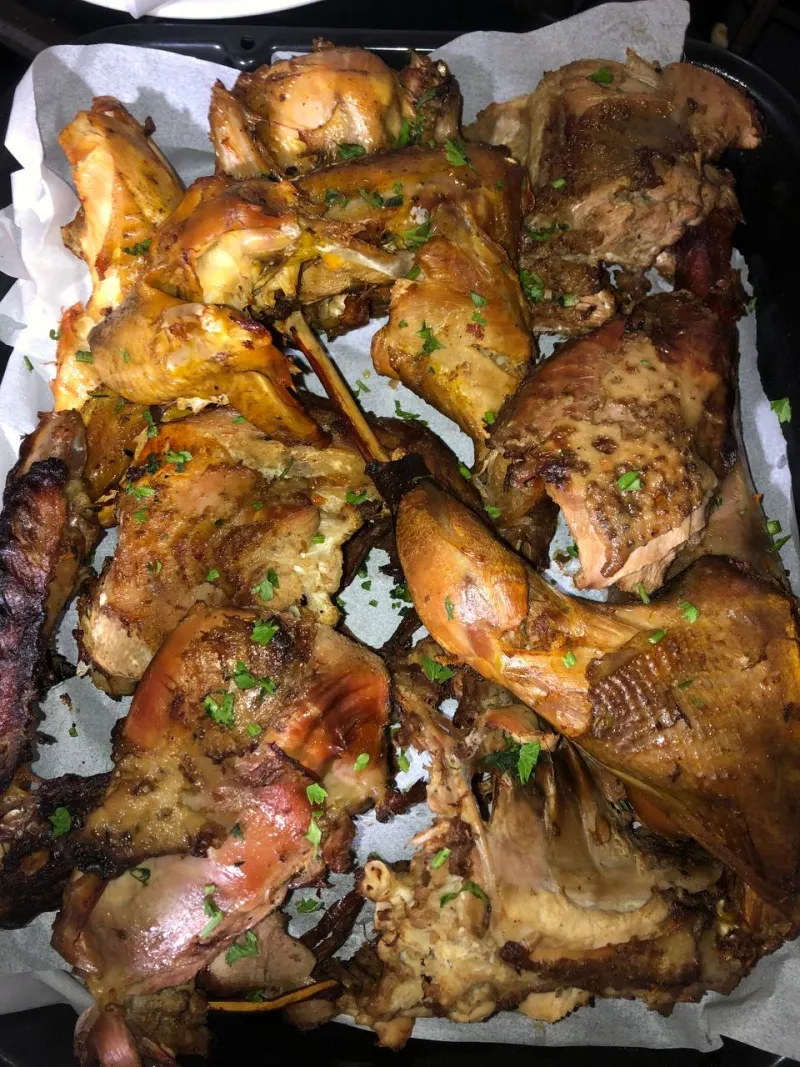
Orchard Fruit, Good Bird: Late-Autumn Suppers Worth Staying In For
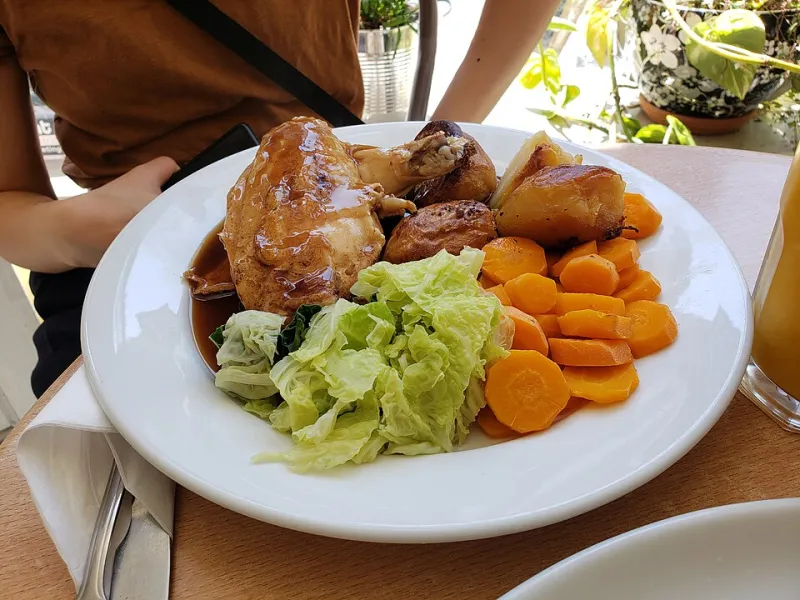
Photo: Andy Li, CC0, via Wikimedia Commons
Late autumn has a particular smell about it: wet leaves, cold stone, and the faint sweetness of fruit that has come indoors before it turns. If you have a bowl of pears going soft on the counter and a few apples rattling around the bottom of the fridge, you are already halfway to supper. British poultry and orchard fruit are old companions, and they do not need much persuasion.
The point is not to make roast chicken look fancy. It is to let sweetness and sharpness do the work that richness sometimes cannot. Apples and pears bring acidity, perfume and a little softness to the edges of a bird. Cider adds depth without heaviness. Sage and thyme keep everything grounded. This is simple home cooking with a local accent, and it is at its best when the weather is doing its worst.
First, a word about windfall fruit
Use firm pears and apples for roasting, where they will hold their shape and catch the juices. Bruised and softer fruit is better for sauces, chutneys and purées. Do not bother with mouldy specimens, but a few brown patches can simply be cut away. British varieties are worth seeking out: Conference and Comice pears, Bramleys for sharpness, Cox and Egremont Russet apples for fragrance.
If you have more fruit than you can eat, stew it with a splash of cider and freeze in small tubs. It will be welcome in January.
Roast chicken with pears, sage and cider
This is the centrepiece supper for a cold Sunday, but it is not fussy. Ask for a good British chicken, around 1.5 to 1.8 kilograms.
You will need: one whole chicken; a knob of butter; a few sage leaves, finely chopped; three firm pears, quartered and cored; two onions, cut into wedges; 200 millilitres of dry cider; a teaspoon of mustard; salt and pepper; and a little chicken stock for the gravy.
Heat the oven to 200°C, 180°C fan, gas 6. Rub the chicken all over with butter and sage, season well, and sit it in a roasting tin. Scatter the onion wedges around it and roast for twenty minutes. Then add the pear quarters, pour in half the cider and roast for another forty to fifty minutes, basting once or twice. A 1.6-kilogram bird will usually take around an hour and twenty minutes in total. Check that the juices run clear and the thickest part of the thigh reaches 75°C.
Rest the bird for fifteen minutes. Put the tin on the hob, add the rest of the cider, a splash of stock and the mustard, and scrape up the sticky bits. Bubble for a few minutes, taste, and season. Carve the chicken and spoon the pears and onions around it. Serve with mash or roast potatoes and something green.
Duck breasts with sharp apple sauce
Duck and apples are a classic for a reason: the fruit cuts through the fat and makes the whole plate feel brighter. Two duck breasts will serve two generously.
Score the skin of the duck breasts in a crosshatch, season well, and place them skin-side down in a cold frying pan. Set over a medium heat and let the fat render for six to eight minutes. Turn and cook for another two minutes, then transfer to an oven at 180°C, 160°C fan, gas 4, for six to eight minutes, depending on thickness. Rest for five minutes.
For the sauce, peel and chop two Bramley apples. Put them in a pan with a tablespoon of caster sugar, a tablespoon of cider vinegar and two tablespoons of water. Simmer for ten minutes until soft, then beat in a small knob of butter and a little thyme. Taste and add more vinegar if it needs a lift. Serve with greens and mashed potato, or simply with crusty bread and a sharp salad.
Turkey mince with cider and apples
Turkey mince is often overlooked, which is a shame. It takes kindly to fruit and cider, and it makes a quick midweek supper that feels more generous than the effort involved.
Brown 500 grams of turkey mince in a wide pan, then set it aside. Soften a chopped onion and a stick of celery in a little oil, add two diced apples and a couple of teaspoons of chopped thyme, and cook for a few minutes. Pour in 300 millilitres of dry cider and let it bubble down by half. Return the turkey to the pan, add 250 millilitres of chicken stock and a tablespoon of mustard, and simmer for twenty minutes. Finish with two tablespoons of crème fraîche and plenty of black pepper. Serve with mash, baked potatoes or rice.
Sides, leftovers and a little thrift
Roast pear wedges in a hot oven with a little butter and sage until the edges caramelise. Make a quick slaw with shredded cabbage, apple matchsticks and a mustardy dressing. Use the chicken carcass for stock, and any leftover meat for a sandwich with pear chutney.
A note on buying: ask your butcher or grocer where the bird and fruit come from, and do not be shy about choosing a smaller British chicken if you are cooking for two. The pleasure of this kind of cooking is not in abundance for its own sake. It is in making a good bird and a bowl of windfall fruit feel like exactly what the season intended.