Under the Apple Boughs: What Orchard-Raised Poultry Really Tells You
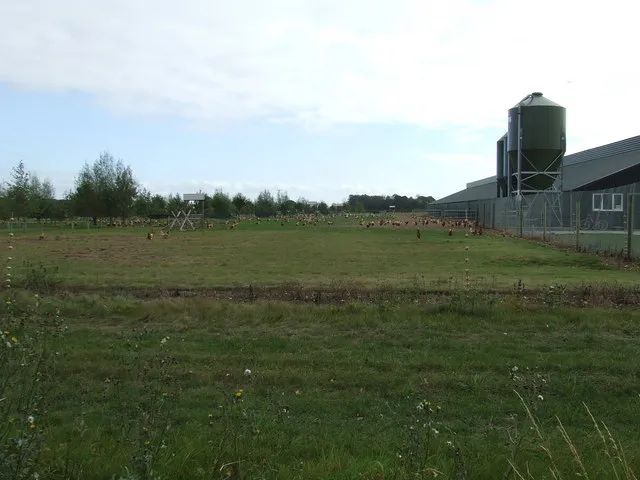
Photo: Keith Evans, CC BY-SA 2.0, via Wikimedia Commons
There is a particular sight that stays with you: an old apple orchard in late summer, branches heavy, grass long enough to hide a hen, and birds moving slowly between the trunks. It looks like a painting of British farming, but it is also a practical system. Orchard-raised poultry is not a new invention. It is an old arrangement that is being picked up again by growers who want healthier trees, better soil and birds with something more interesting to do than stand in a shed.
The appeal is easy to understand. Fruit trees offer shade, shelter and a supply of insects and windfall fruit. Poultry offer scratching, pest control and muck. Put the two together carefully and you get a mixed system that can work for the land, the birds and the farmer. Put them together carelessly and you get a marketing phrase. The difference matters when you are standing at a farm gate or a butcher counter.
Why put birds among fruit trees?
A well-run orchard is not just a row of trees. It has grass, hedges, leaf litter and a whole small world of insects and worms. Chickens and turkeys are natural foragers. Given the chance, they will spend the day working through that ground, turning over soil, hunting for grubs and nibbling at fallen fruit. That varied diet and exercise can show in the texture and flavour of the meat.
For the grower, the birds can help with pest pressure and add fertility. For the trees, the arrangement can mean less reliance on mowing and more organic matter going back into the soil. It is not a magic fix. Too many birds in a small orchard will poach the ground, strip the lower leaves and overload the soil with nutrients. The system only works when stocking rates, rotation and rest periods are taken seriously.
This is why the phrase orchard-raised is not a guarantee on its own. It describes a setting, not a standard. A genuine orchard system is one where the birds actually live among the trees for a meaningful part of their lives, with access to the canopy, the grass and the shade. A few decorative trees beside a shed do not make the same thing.
What it means for flavour, welfare and the land
Flavour is the part most of us care about first. Birds that grow a little more slowly and move around more tend to have firmer muscle and a more savoury depth. You are not necessarily looking for a gamey flavour. Think of a chicken with a bit more grip to it, a turkey with richer juices, skin that crisps properly because there is a decent layer of fat beneath it. Orchard systems often suit slower-growing breeds and older-fashioned table birds, and that tends to show on the plate.
Welfare is the other side of the same coin. Shade matters in a changing climate, and so does cover. Trees give birds somewhere to retreat from sun, wind and the eye of a predator. They also break up the range, encouraging natural behaviour: scratching, dust-bathing, perching and exploring. A good orchard system will still have proper shelter, fencing and predator protection. Trees alone do not keep a fox out.
For the land, the benefits are real but conditional. Well-managed orchard poultry can improve soil biology and reduce the need for inputs. Poorly managed, it can compact ground and create nutrient hotspots. The honest answer is that the system is only as good as the farmer running it. That is why questions matter more than logos.
Reading the signs at the farm gate
If you buy direct, ask how the birds use the orchard. Do they have continuous access during the day? Are the trees mature and fruiting, or newly planted whips? How many birds are running per acre or hectare? Is the flock moved, and does the ground get a rest? What breed are they, and roughly how old are the birds at slaughter? Can you see the setup for yourself?
A genuine grower will usually welcome these questions. They may not have a glossy leaflet, but they will know their stocking density, their feed, their predator plan and their processing arrangements. Ask about shelter, shade and water in hot weather. Ask what happens to the birds at night. Ask whether the orchard is a proper part of the business or a seasonal add-on.
At the butcher counter, the same principle applies. Ask for the farm name and the system behind the bird. A good butcher will know whether the poultry came from an orchard unit, a free-range farm or a pasture-based setup, and will be honest about the difference. Be wary of vague wording. Orchard-raised is not a legally defined term in the way that organic is, so it pays to treat it as a conversation starter rather than a certification.
What to look for on the bird itself
Once you have the provenance sorted, use your senses. The skin should look clean and intact, not dry or patchy. The bird should smell fresh and mild. A decent layer of fat is a good sign in a slower-grown bird, especially for roasting. If you are buying turkey, ask when it was processed and whether it has been hung or rested. If you are buying chicken, ask whether it is a whole bird from a smaller batch or a larger intensively reared one. The answer will often explain the price difference.
Do not be shy about asking for the bird to be left whole, jointed or spatchcocked. A butcher who knows the farm will usually be happy to prepare it how you need it. That is part of the value of buying from a counter rather than a chiller cabinet.
Cooking with a little more care
Orchard-raised birds often reward a gentler approach. They have more texture and more fat, so they can take a slower roast, a longer braise or a session in a low oven. Dry-brining with salt the night before helps the skin crisp and the meat stay juicy. Keep the flavours simple: sage, thyme, cider, apples, pears, a little mustard. The bird is doing the work.
And do not throw away the bones. An orchard bird that has lived a bit longer will make a proper stock, and that stock is the start of the next meal. That is the farm-to-table idea in its simplest form: buy well, cook thoughtfully, use the whole thing.
Orchard-raised poultry feels right for 2026 because it joins up things British kitchens already care about: good welfare, honest provenance, seasonal fruit and less waste. It is not a shortcut to better meat. It is a system that needs managing. But when it is done properly, you can taste the difference, and you can see it in the land.