Why Monday Should Get the Roasting Tin
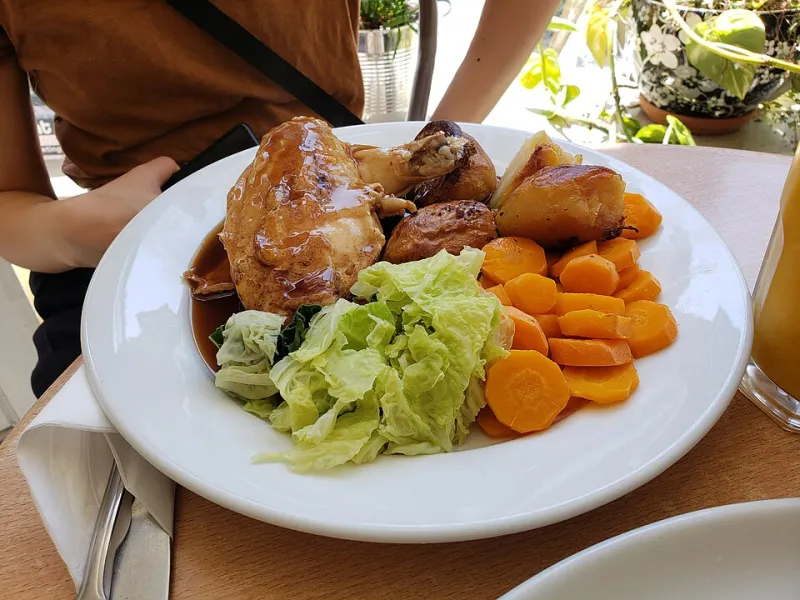
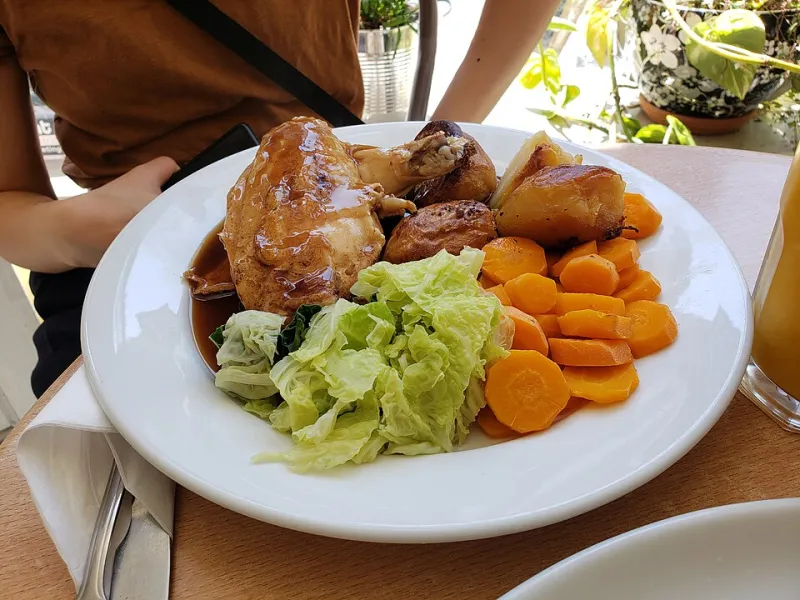
Photo: Andy Li, CC0, via Wikimedia Commons
There is a certain romance to the Sunday roast. The house smells of thyme and hot fat, the radio is on, and nobody is in a hurry. But romance can be expensive and a little inflexible. By Monday, the leftovers are often a cold pile of meat and a vague sense of duty. What if we moved the whole bird to Monday instead?
This is not an attack on Sunday lunch. It is a suggestion that the roasting tin deserves a place in the working week. A whole chicken or guinea fowl cooked on Monday gives you a hot dinner, a fridge full of possibilities and a reason to stop buying plastic-wrapped fillets on autopilot. It is cheaper per portion, it uses the whole animal, and it turns meal planning into something that actually tastes good.
The case for a midweek bird
Whole birds are usually better value than portions. You pay for bones and fat, yes, but you also get stock, dripping and several meals. A 1.6kg chicken can feed two people generously on Monday, give sandwiches or a salad on Tuesday, and become a pie or a soup later in the week. That is not frugality for its own sake; it is good cooking.
Time is the usual objection. But a roast does not need constant attention. Season the bird, put it in the oven, and get on with the washing-up or a phone call. A chicken takes roughly 20 minutes per 500g plus 20 minutes at 200C, though a thermometer is more reliable. Guinea fowl is leaner and a little faster; cover the breast with bacon or butter to keep it moist.
Monday also solves the leftovers problem. When you roast on Sunday, the leftovers land in the fridge with the week already underway. When you roast on Monday, you are deliberately cooking for the days ahead. Cool the bird within 90 minutes, strip the meat, keep the carcass for stock, and store everything in shallow containers. Use the meat within three days, or freeze it.
Monday: lemon, bay and cider roast chicken
This is less a recipe than a method. Use a whole chicken or guinea fowl. If you are using guinea fowl, add a few rashers of streaky bacon over the breast.
You will need: a 1.5–1.8kg chicken, one lemon, a few bay leaves, a glass of dry cider, a knob of butter, salt and pepper, and a little water in the tin.
Heat the oven to 200C. Season the bird inside and out. Put the lemon halves and bay leaves in the cavity. Rub the butter over the skin. Sit the bird in a roasting tin, pour the cider around it, and add a splash of water. Roast for about 1 hour 20 minutes, basting once, until the juices run clear and the thigh reaches 74C. Rest for 20 minutes.
Serve the legs and thighs with potatoes roasted in the pan juices and a green vegetable. Strip the breast meat and keep it for Tuesday. Pour the pan juices into a jug, skim the fat, and keep it for cooking. Save the carcass.
Wednesday: chicken, leek and tarragon filo pie
This is where Monday pays off. You need about 300g of cooked chicken, two leeks, a knob of butter, a tablespoon of plain flour, 300ml of chicken stock, a splash of cream or crème fraîche, a teaspoon of chopped tarragon, and four sheets of filo pastry.
Slice the leeks and soften them in butter. Stir in the flour, then add the stock gradually. Simmer until thick, then add the cream, tarragon and chicken. Season well. Spoon into a small baking dish. Brush the filo with melted butter, scrunch each sheet slightly, and layer over the filling. Bake at 190C for 25–30 minutes until crisp and golden.
Serve with peas or a sharp green salad. The pie uses the meat you stripped on Monday, and the stock can come from the carcass. If you have a little gravy left from Monday, loosen it with stock and pour it over.
The practical bits
Buy the best bird you can afford, but do not overcomplicate it. A free-range or organic chicken from a butcher or farmers’ market will usually have more flavour than a standard supermarket bird. Ask for the giblets if they are available; they make excellent stock. If you are cooking guinea fowl, remember it is leaner, so keep an eye on it.
Plan the week backwards. Monday is roast. Tuesday is sandwiches, salad or a quick stir-fry. Wednesday is pie or soup. Thursday is stock. Friday is something else entirely. That is not drudgery; it is a rhythm that saves money and cuts waste.
The Sunday roast will always have its place. But Monday is underrated. Give it the roasting tin, and the rest of the week looks better already.